

Hiking With Dogs in the Adirondacks: A Local's Guide

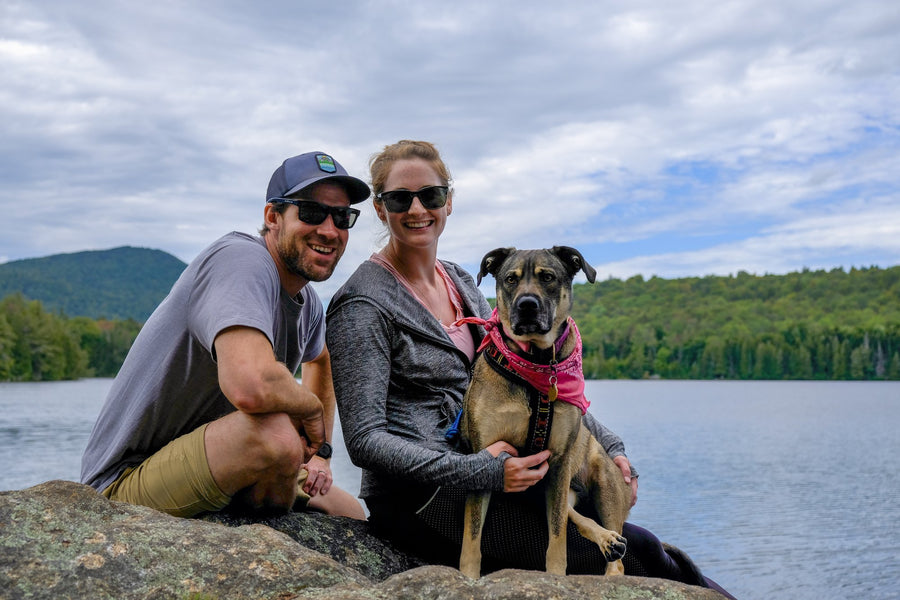
Our dog Lucy is ten now. She's climbed fire towers, walked wild forest access roads, and covered plenty of hiking trails across the park. She still comes on almost every family adventure, whether that's a hike, a canoe trip, or a lazy paddleboard session on a quiet pond. She's also the reason I've learned, over the years, which trails and conditions work for a dog and which don't — and where the real risks are in a region that most generic "hiking with dogs" posts get wrong.
If you're planning to hike the Adirondacks with a dog, here's what's worth knowing before you go — the regulations that catch people off guard, the trails that actually work for dogs, and the real risks worth preparing for.
A quick note: some of the gear links below are Amazon affiliate links. If you buy through them, we earn a small commission at no extra cost to you. We only link to gear we actually use with Lucy.
Know the Rules — Most People Don't
Dog rules in the Adirondacks aren't universal — they change depending on where you are in the park, and they're worth knowing before you hit the trail.
Adirondack Dog Regulations at a Glance
- High Peaks Wilderness — Central Zone: Dogs must be leashed at all times. No exceptions.
- DEC Forest Rangers can and will ticket you for an off-leash dog where leashes are required. This isn't a friendly reminder — it's a regulation.
- Adirondack Mountain Reserve (AMR): Dogs are not permitted. This includes the popular trails to Indian Head, Rainbow Falls, and the Great Range via the Lake Road. If you're hiking out of St. Huberts, leave your dog at home.
- Overnight in the HPW Central Zone: Bear canisters are required for all food, including dog food.
- Voice control is not a substitute for a leash on any trail where leashes are required — and summit stewards will (rightly) tell you so.
The AMR one catches a lot of people off guard. It's private land with a public hiking easement, and the owners have set their own rules. A no-dogs policy is one of them. If you pull into the parking lot with your dog, you're turning around.
Is Your Dog Actually Ready for This Hike?
Before you pick a trail, be honest about what your dog can handle. A few things worth thinking about:
- Short-muzzled breeds — pugs, boxers, bulldogs, Boston terriers — have a much harder time regulating temperature and breathing on climbs. They can overheat fast even on cool days. Pick easy, shaded trails and watch them closely, or leave them home on hot days.
- Puppies need to wait. Most vets recommend waiting until your puppy has all their shots (usually around 5 months) before taking them on trail, and keeping the first few outings short — under an hour — while their joints and stamina develop.
- Older dogs or dogs with joint issues can often still hike — just scale down. Shorter distance, less elevation, more breaks.
- Keep vaccinations current. Dogs can pick up or spread disease to wildlife in the backcountry, and a current rabies tag is standard courtesy if your dog ever has an unplanned encounter with another animal.
- ID tag with your phone number, and a microchip. The physical tag is what a stranger can read immediately if they find your dog. The microchip is your backup for when the collar comes off — which happens more than you'd think in the backcountry. You want both.
Six ADK Trails That Are Genuinely Great for Dogs
"Dog-friendly" should mean more than just "dogs are allowed." A good dog trail has manageable grade, shaded forest cover, water access if possible, and no scrambles or ladders that'll leave your pup stuck halfway up. Here are six solid picks we'd recommend — each in a different part of the park.
Henry's Woods
A 212-acre community preserve with well-groomed, rolling trails just minutes from downtown Lake Placid. Soft forest floor, no real climbing, and the loops are flexible enough to do a short or long version depending on how your dog's feeling.
Read the Henry's Woods guide →Baxter Mountain
A short, steady climb to an open summit with a big payoff view. Under 2.5 miles round trip, well-shaded until the top, and the summit has plenty of room for a well-behaved dog to sit with you while you eat a sandwich.
Read the Baxter Mountain guide →Rocky Mountain
A quick, 1-mile round-trip hike out of Inlet with a big view of Fourth Lake from the summit. It's steep for its length, so it's a workout, but the short distance makes it a natural choice for families hiking with dogs in the Old Forge area.
Read the Rocky Mountain guide →Coney Mountain
Coney's short hike and expansive 360° summit make it a local favorite — especially in the fall. A natural choice if you're working on the Tupper Lake Triad, and gentle enough to bring a dog along without burning them out.
Read the Coney Mountain guide →Silver Lake Mountain
A quick 0.9-mile climb to an underrated summit with a great view of Whiteface and Silver Lake below. The final stretch has some open rock ledges — not technical, but worth knowing before you go. A quieter alternative to busier Lake Placid-area trails.
Read the Silver Lake Mountain guide →Sawyer Mountain
A short beginner hike with only about 630 feet of gain over a mile. The summit is wooded, but the lookouts along the way give you views of Snowy, Wakely, and the surrounding Indian Lake region. A good low-key option with a dog.
Read the Sawyer Mountain guide →What We Actually Carry for Lucy
Here's what we bring every time, and why.
- A 6-foot leash, plus a hands-free belt for longer hikes. We use the Ruffwear Crag EX Leash, which extends and can be worn around your waist as a hands-free belt. The belt setup is a game-changer on uneven terrain where you need both hands — and keeps you from being yanked off your feet when a squirrel appears.
- A harness with a handle on the back. For shorter hikes, Lucy wears the Ruffwear Front Range Harness — simple, well-padded, easy to put on. For bigger days, we use the Ruffwear Front Range Day Pack, which has a sturdier handle on the back and small saddlebags we lightly pack with treats and waste bags. The handle matters more than people realize: on steep rocky sections, a quick lift by the handle is safer for your dog than tugging on a collar or leash.
- A collapsible water bowl and extra water. Dogs need more water on trail than people assume — figure at least an ounce of water per pound of dog per hour of activity, in addition to what you're drinking yourself.
- High-calorie treats or kibble. Dogs burn calories fast on trail. A handful of regular food at a water break makes a real difference on longer hikes.
- Waste bags and a way to carry them out. Clip them to the leash or pack.
- A small first aid kit with tweezers and vet wrap. Tweezers are for ticks (and, if you're unlucky, porcupine quills). Vet wrap stabilizes a torn pad long enough to get back to the car.
- Paw balm for hot rock, cold snow, or after-hike recovery. We use Musher's Secret — a non-toxic wax originally developed for Canadian sled dogs that forms a breathable, invisible barrier on paw pads. A thin layer before the hike goes a long way. We skip booties unless we're in deep snow — most dogs hate them and they're more trouble than they're worth on dirt trails.
- A whistle. If your dog ever slips a collar or bolts after wildlife, a whistle carries farther than your voice and gives them something consistent to home in on.
Heat, Water, and Paws
More Adirondack dog hikes get cut short by heat than by anything else. Dogs cool themselves by panting, which works fine in 60-degree weather and falls apart quickly when it's 85 and humid. Watch for heavy panting that doesn't slow down during breaks, excessive drooling, bright red gums, or a dog that starts lagging instead of leading. Those are your cues to stop in the shade and get water into them.
One of the genuine advantages of hiking in the Adirondacks: water. On most trails you're never more than a mile or two from a stream, pond, or lake where a dog can cool off completely. Take the detour. Let them wade. It's worth the extra fifteen minutes.
Paw care gets overlooked. Hot granite on an exposed summit in July can burn a dog's pads the same way it burns bare feet. Unbroken ice and compacted snow can cut them in winter. Check your dog's pads at breaks, and if something looks wrong, address it before it becomes a problem — a torn pad three miles from the car is a dog you're probably carrying out.
Wildlife: Porcupines First, Bears Second
I'll say this plainly: porcupines are the actual dog hazard in the Adirondacks, more than bears. They're common, slow, and don't run from dogs. A curious dog who gets close takes a face full of quills that has to come out at a vet — and the barbed quills keep working their way inward if you leave them. It's a real risk, a painful one for the dog, and an expensive one for you.
Keep your dog on the trail. Keep them leashed where leashes are required (and honestly, even where they aren't, if you're in porcupine country — which is most of the park). If your dog is off-leash on a wide forest road, recall matters more than any other piece of training.
Black bears are around, but a leashed dog is usually a deterrent, not an attractant. The real bear issues with dogs are food: don't leave a dog food bowl out at a campsite, and if you're camping overnight in the HPW Central Zone, the bear canister requirement applies to your dog's food too. Moose are worth a quick mention too — they're elusive in the Adirondacks and you probably won't see one, but the population is slowly recovering. If you do cross paths with one, give it enormous space and turn around if it's blocking the trail.
Leave No Trace Actually Applies to Dogs
Dog waste isn't natural fertilizer. A domestic dog's diet is wildly different from any wild animal's, and dog waste introduces nutrients and pathogens that native ecosystems aren't built to process. On day hikes, "packing it out" means exactly that — bag it and carry it off the trail. Don't leave bagged waste next to the trail with a plan to grab it on the way back. You won't. Nobody does.
Camping overnight with a dog? If you're bringing a shovel for your own cathole anyway, your dog's waste goes in the same place: 6–8 inches deep and at least 200 feet from any water source, campsite, or trail.
The other one that matters: stay on the trail. Dogs chasing wildlife, crashing through sensitive vegetation, or wandering into alpine zones above 4,000 feet cause real damage. The summit steward on Algonquin doesn't want to have this conversation with you either, so just leash up before the climb gets above treeline.
ADK9 Stickers
We designed a series of Adirondack dog stickers — vinyl, weatherproof, and built for the water bottle or truck bumper of any trail dog's human.
A Few Final Things
Check conditions before you go. Mud season (typically April and early May) is hard on trails and hard on dogs. Stay below 2,500 feet until things dry out. In winter, check snow depth — snowshoes are required for humans when there's 8+ inches, and dogs will posthole in deep snow unless there's a packed track.
And if you're planning a trip that's beyond what you've done with your dog before, scale up gradually. A dog that's handled three miles of flat trail isn't necessarily ready for eight miles with 2,000 feet of gain. They'll try. That doesn't mean they should.
Heading out soon? Check current trail conditions before you go, or browse more Adirondack hiking guides.
Trail Conditions Hiking Guides