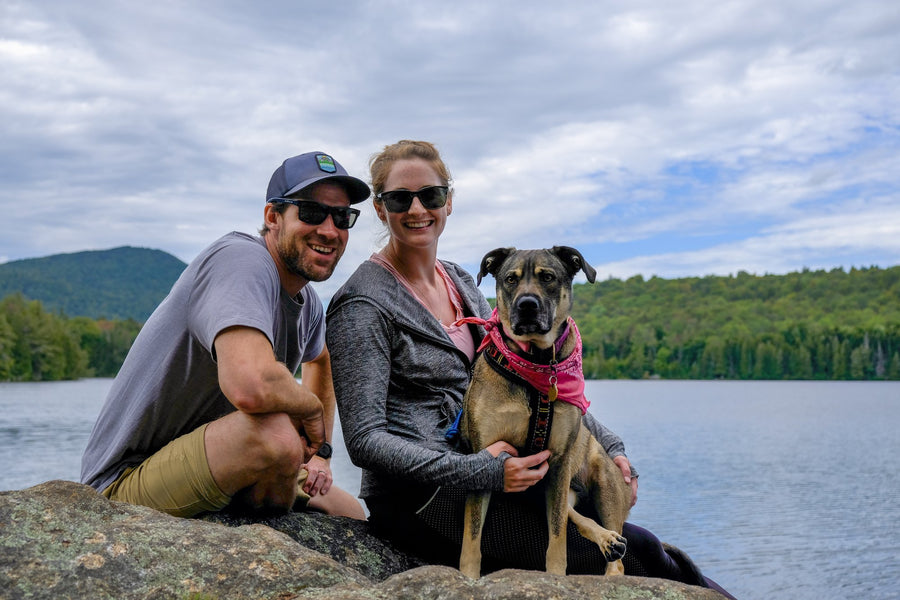


Paddling in the Adirondacks
There's a strong case that paddling is the defining Adirondack experience. More than 3,000 lakes and ponds, 30,000 miles of rivers and streams, and entire wilderness areas where the only way in is by boat. Whether you're out for an hour on a quiet pond or loading the canoe for a three-day carry-to-carry route, the water is where this park opens up.
Watch our full Adirondack paddling playlist on YouTube →
We've spent years documenting paddling trips across the park — quiet morning paddles on small ponds, multi-day canoe camping routes through motor-free wilderness, island camps on the Saranac chain, and slow drifts down the Raquette. This is our full Adirondack paddling playlist, updated as new trips get filmed. Hit play, queue it up, and let it run.
Before You Go
Don't own a boat? Two long-running ADK outfitters worth knowing: St. Regis Canoe Outfitters in Saranac Lake (since 1984, the St. Regis Canoe Wilderness specialists) and Raquette River Outfitters in Tupper Lake (since 1983, fourth-generation Adirondackers covering the Raquette River corridor). Both rent boats, plan routes, and run shuttles for point-to-point trips.
Featured Paddles
Our Favorite Paddles in the Adirondacks
Paddlers We Follow
Butch & Barb — Canoe Camp Climb
Butch and Barb run Canoe Camp Climb, a YouTube channel dedicated to authentic Adirondack canoeing, canoe camping, and backcountry trips — the remote kind most people never see. Ultralight pack canoes, real wilderness, no frills. If you want to get a feel for what multi-day ADK canoe tripping actually looks like before you plan your own, their channel is one of the best places to spend an hour.
We've met Butch in person — fellow ADK adventurer with mutual friends in the community. Genuinely good human, genuinely good paddler.
Watch on YouTube →Canoe Camping
Paddle In. Camp. Paddle More.
Some of the best campsites in the Adirondacks are only reachable by water — island sites on the Saranac chain, remote lean-tos on Lake Lila, tucked-in shoreline spots in the St. Regis Canoe Area. Our Camping page covers reservations, regulations, and the full setup for making an overnight of it.
Protect the Water
Yes, Canoes and Kayaks Spread Invasives Too
Aquatic invasive species — Eurasian milfoil, zebra mussels, spiny water flea, hydrilla — hitchhike on hulls, in bilge water, on paddles, and tangled in straps. They don't care if your boat has a motor. A canoe moved between two ponds is just as capable of seeding the next infestation as a 200-horsepower bass boat. The damage to native ecosystems is permanent and the cost to local communities is real.
Three steps, every time you move between waters:
- Clean — remove all visible plants, mud, and debris from your boat, paddles, anchor, and gear.
- Drain — empty all water from the hull, hatches, dry bags, and any compartment that holds water.
- Dry — let everything dry completely (5+ days when possible) before launching in a new waterbody.
Even better: stop at one of the 60+ free AWI inspection stations running across the park from Memorial Day through Labor Day. Five minutes, no charge, real impact.
Annual Paddling Events
-
Early
May'Round the Mountain Canoe & Kayak RaceThe unofficial kickoff of Adirondack paddling season. Held the second Saturday of May out of Saranac Lake. Organized by NFCT.→ -
Mid
MayAdirondack Paddlefest — Old ForgeThe largest on-water canoe, kayak, and SUP demo and sale in the country. Test paddle hundreds of boats, talk to factory reps, score event-only deals. Hosted by Mountainman Outdoor Supply Co.→ -
Mid
JuneAdirondack Paddling SymposiumA full instructional weekend with beginner and intermediate course tracks for kayaks, pack boats, SUPs, and canoes. The right move if you want to actually level up your skills.→ -
Early
AugustGreat Brant Lake Canoe RaceA six-mile race down the length of Brant Lake's picturesque shoreline, finishing on the Mill Pond in Horicon. Part of NFCT's Adirondack Race Series.→ -
Post
Labor DayAdirondack Canoe Classic — The 90-MilerThe marquee event. Three days, 90 miles, Old Forge to Saranac Lake — following the first 90 miles of the Northern Forest Canoe Trail. A multi-decade Adirondack tradition open to all classes of canoes, kayaks, and SUPs.→ -
Late
SeptemberLong Lake Long Boat RegattaCloses out the NFCT Adirondack Race Series each year on the last Saturday in September. Long Lake, partnered with Long Lake Recreation and Tourism.→
If You're Going Deep
Adirondack Paddler's Maps & Guidebook — St. Regis Canoe Outfitters
Published by Paddlesports Press, the in-house map operation at St. Regis Canoe Outfitters (Saranac Lake, NY)
The Adirondack Paddler's Map is now in its 13th edition — waterproof, tear-resistant, and detailed in a way no generic recreation map will be. Up-to-date portages, numbered campsites, color-coded land status (state vs. private vs. wilderness). Pair it with the Adirondack Paddler's Guide (5th ed., 2022, 312 pages, spiral-bound) and you've got the deepest paddling reference set for the park, full stop. There are also close-up sheets for specific areas — St. Regis Canoe Wilderness, Saranac Lakes, Whitney Wilderness (covers Bog River Flow and Lake Lila), the Raquette River, the Newcomb area and Upper Hudson watershed. Made by paddlers who've been outfitting the park since 1984.
Browse the Full Series →Planning Resources
-
NYS DEC — PaddlingOfficial state guidance on paddling waters, regulations, launches, and access across the Adirondacks and beyond.→
-
NYS Parks — Boating & PaddlingRegistration requirements, PFD law, boater safety courses, and state-run launches.→
-
Paul Smith's College — Adirondack Watershed InstituteThe org running 60+ free boat inspection stations across the park. Research, stewardship, and the people on the front line of protecting ADK water.→
-
VisitAdirondacks.com — PaddlingRegional overviews of paddling destinations, outfitters, and seasonal events.→
-
Adirondack.net — Water SportsLaunch lists, outfitter directories, and lake-by-lake guides for paddlers across the park.→
-
ADK Mountain ClubPaddling trips, instructional clinics, and the ADK Loj/Heart Lake paddling access points.→
Looking for whitewater instead of flatwater? Head over to our Whitewater Rafting page. Want to explore all six million acres? The Recreation Hub has everything we cover — hiking, biking, skiing, fishing, and more.